July Fifth
Any good sea story should begin with a foreboding sentence like, 'the seas were very angry that day' but sadly, this sea story simply begins by me telling you that July Fifth was the official day of my promotion to Chief Mate. The story has a decent ending. Very rarely do sailors tell of harrowing adventure only to then say that the entire crew died and were never found. Most times the entire purpose of the story is to illuminate their nautical prowess and daring spirit. This is not one of those times. July Fifth is a day I won't ever forget. My first heavy lift. While it is true that a few days prior I had witnessed a heavy lift and blogged about being a proud mama I wasn't technically calling the shots. I was aboard as an 'observer'. It turns out, being an observer and being a Chief Officer are two very different things.
We arrived into port about 4 hours later than expected. Apparently this is a big deal. When you are sailing on a tanker there aren't 30 Stevedores sitting on the dock getting paid while you make your approach.
As soon as I had my final line fast on the bow I walked back to help the crew rig the gangway. There were literally 10 people on the dock yelling questions at me. They weren't even aboard yet and they were making demands!!!
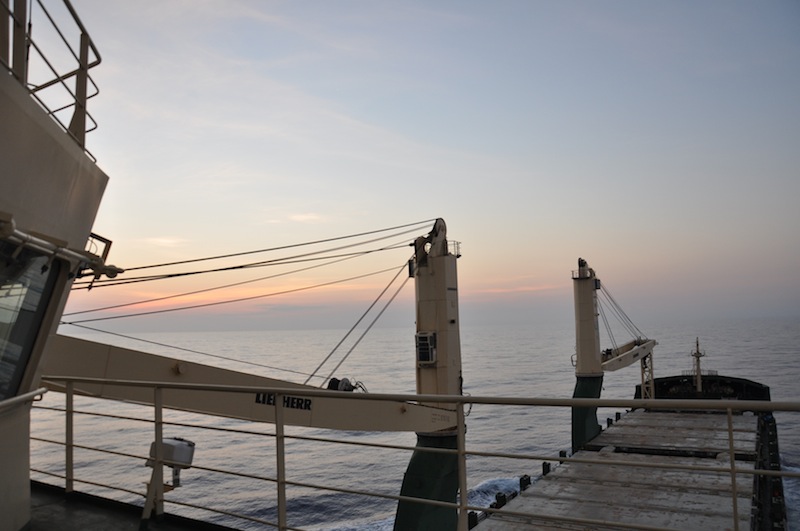
I got the hatch covers open as quickly as I could. I broke the cranes from their cradles and immediately began opening the 'tween deck to prepare for cargo.
While I was in the hold our cargo was delivered by railcar. A 215 ton generator.
I sent the wire grommets to the pier so the Stevedores could begin rigging the cargo.
Then the fun began.
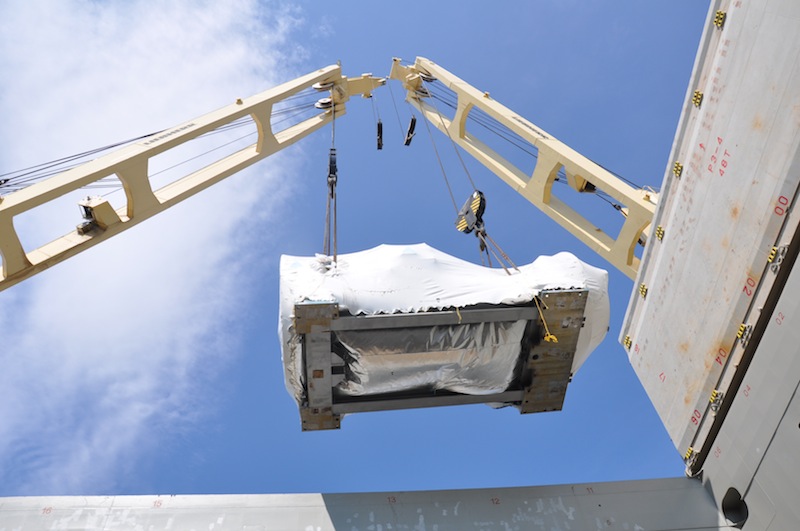
We took tension on the generator with our crane. Slowly taking strain while monitoring the position of the cranes hook, the list of the ship, and the generators position on the rail car.
When it seemed like the unit would be close to lifting we stopped using the crane and began using the ships ballast to 'float the cargo'. As soon as the cargo was afloat we began to pick it up so that it would clear its welded stoppers and not hit any part of the rail car.
And then the alarm began to sound on the crane. A very loud, very insistent alarm. And then the crane wouldn't move.
No lie. The lift was literally three feet off the railcar. A twenty five million dollar piece of cargo suspended in the air.
A forklift was immediately brought around and the rail car was pushed out of the way. We used manual taglines to help guide the generator where we needed it to be and then brought the rail car back into position.
This was incredibly challenging. Because the unit weighed so much it had to be placed on the rail car perfectly. If it was even slightly off center there was a possibility that the rail car could tip over. When I say perfectly I mean we had measuring tapes out and were adjusting within half an inch accuracy. Considering that we were guiding this operation with taglines half inch accuracy is pretty darn impressive.
A team of welders was on standby at this point and as soon as the unit was down they were there weding stoppers to prevent any shifting.
The operation was put on hold overnight.
The Port Captain, Vessel Manager and Myself brainstormed for a few hours on how to best proceed the following morning.
Here is what I learned: When lifting heavy objects a crane can lift more when the object is closer to it's base. When the cargo was dropped off at the pier no one 'spotted' it meaning, it was too far away from the crane.
So begins Day Two.
A train engine comes to the pier and moves the cargo closer to the crane. Things are looking good.
Okay, hold on, I have to give some more background information....
While we were doing a single crane lift we were using our other crane to help 'stabilize' the vessel. When one crane is slewed fully over the side of the vessel it causes the ship to list about 1.5 degrees.
(I realize this doesn't sound like much.....but it is. It feels strange. In the middle of the heavy lift our vessel was listed over approximately 4.5 degrees. Consider this, we are currently in a 2 meter sea and are rolling about 3.5 degrees. To be listed over that much at the pier feels weird.)
Back to the crane. When the ship starts to list to port the other crane is slewed to starboard to help counteract the list. It is very effective. Mostly because it is fast. It takes much longer to pump the same equivalent of water during a ballast operation.
Back to the story, the cargo is closer and things look good.
We start the crane and are preparing for the lift. I send someone into the other crane to prepare to slew for list control. They start the crane and the crane connected to the cargo shuts down.
Can you believe this?! The crane connected to our 25 million dollar cargo has tripped out!!!!!!!
We continued with the lift relying solely on ballast. As we took more and more strain on our crane our ship began pulling off the pier.
As we had been troubleshooting and working on the cranes the tide had gone out. Our lines were slacker than we realized. As the ship began to list to port our lines simply 'tightened' themselves by stretching out which, pulled us off the dock.
In order to avoid parting lines and completely pulling off the pier the cargo had to be slewed back over the pier while lines were tended.
The good news?
One hour later the cargo was safely in the hold.
I can't even begin to describe the pucker factor involved in a situation like this. Manuevering rail cars with forklifts, guiding generators with taglines and pulling the ship off the pier is no fun!
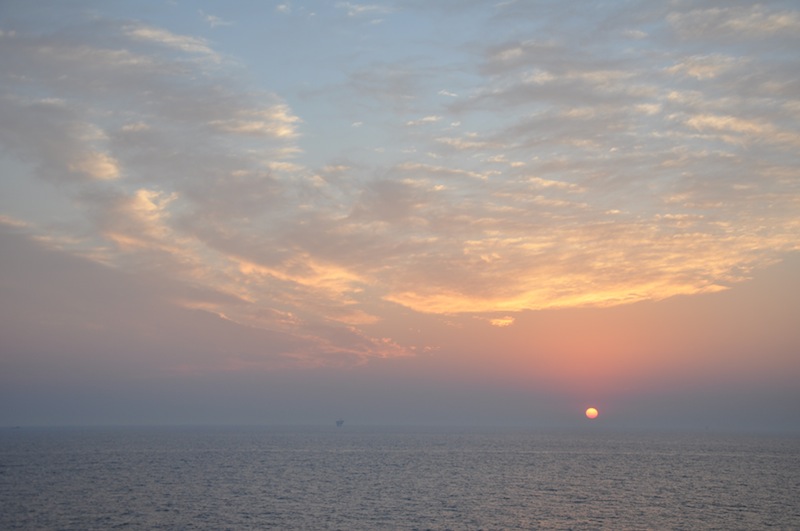
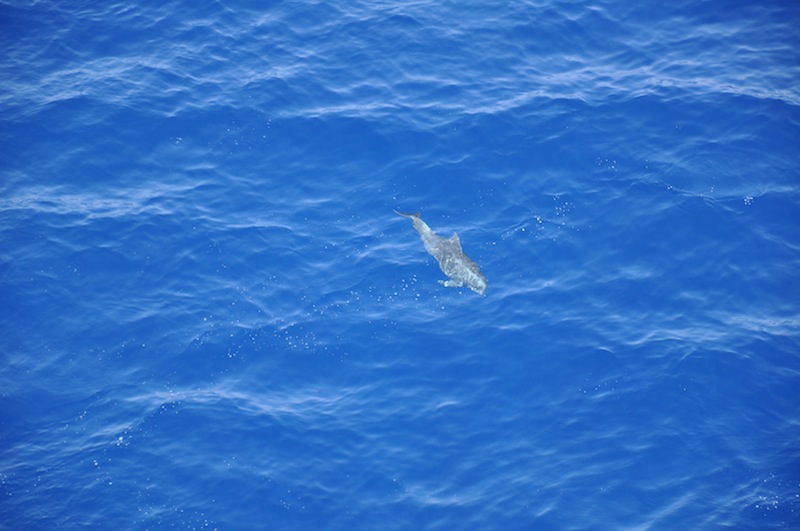
I can't tell you how amazing it feels to be back at sea. Watching sunrises with a cup of coffee, seeing whale tails and oh yes, catching up on some sleep!
While I will admit that my stress levels are pretty high I will say that my shipboard happiness percentage level is higher than it has been in a very long time.
(I wanted to tell this story with a little more pizazz but sadly, by the time I hit my room in the evenings the last thing I want to do is sit down at the computer!!!! Please know that I love you all!)